

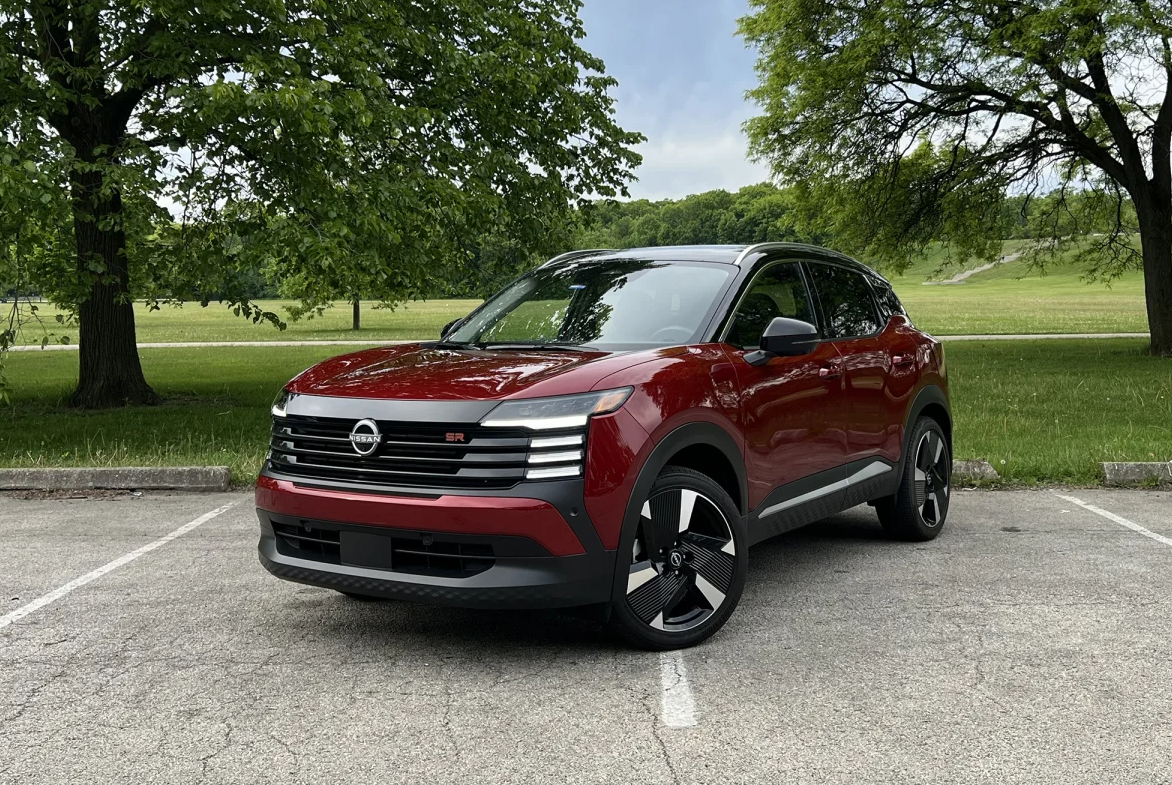
Key Takeaways
After three months of real-world testing, the 2026 Nissan Kicks proves that budget SUVs can deliver surprising value without major compromises in the areas that matter most to daily drivers.
• Starting at $24,275, the Kicks offers exceptional value with standard 12.3-inch touchscreen, wireless smartphone integration, and comprehensive Safety Shield 360 across all trims.
• The redesigned 2.0L engine delivers 141 hp and improved fuel economy (31 mpg combined FWD), though 0-60 mph times of 8.7-10.3 seconds reveal this SUV prioritizes efficiency over performance.
• AWD costs $1,500-$1,650 more but sacrifices significant cargo space (24 vs 30 cubic feet), making FWD the smarter choice for most urban buyers who rarely need extra traction.
• The SV FWD trim at $24,470 hits the sweet spot by adding 17-inch wheels, wireless charging, and keyless entry without the cargo penalties of AWD or premium pricing of the SR.
• Interior quality exceeds expectations for the price point with comfortable Zero Gravity seats, spacious front legroom (42.7 inches), and surprisingly refined materials that compete well in the subcompact segment.
The 2026 Nissan Kicks makes the most sense for first-time SUV buyers, city commuters, and budget-conscious shoppers who want modern technology and safety features without paying premium prices. While it won’t win any acceleration contests, it delivers where daily drivers actually need it: comfort, efficiency, and practical features. The 2026 Nissan Kicks wasn’t on my radar until I spent three months behind the wheel, and it changed my viewpoint on what a budget SUV can deliver entirely.
Starting at $24,275, the Nissan Kicks 2026 brings solid value with its sneaker-inspired design and spacious cargo area. Tech features feel anything but cheap. I expected compromises everywhere, but this Nissan Kicks SUV delivered where it mattered most. This 2026 Nissan Kicks review tucks into real-life performance and interior quality while examining whether the Nissan Kicks price justifies what you get. I’ll break down each trim level and share my honest take on daily driving. You’ll know if this compact SUV deserves a spot in your driveway.
What Is the 2026 Nissan Kicks and Who Should Buy It?
Nissan Kicks SUV Redesign Overview
Nissan redesigned the Kicks for 2025, transforming it from an underpowered city runabout into a more capable subcompact SUV. The biggest change came under the hood. Out went the wheezy 1.6-liter four-cylinder engine, replaced by a 2.0-liter unit producing 141 horsepower and 140 pound-feet of torque. That represents gains of 20 horsepower and 26 pound-feet over the previous generation.
The 2026 Nissan Kicks now offers all-wheel drive for the first time in its history. This addition brings more than just traction. AWD models feature a strut-type rear suspension instead of the front-wheel-drive version’s torsion-beam setup, which affects ride quality. The vehicle also grew, measuring 171.9 inches in length and 70.9 inches in width. Ground clearance sits at 8.4 inches and positions it above competitors like the Hyundai Kona and Chevrolet Trax.
Key Features That Stand Out
Every 2026 model now has a 12.3-inch touchscreen with wireless Apple CarPlay and Android Auto integration. This represents a notable upgrade for the base S trim, which previously made do with a smaller 7-inch screen lacking smartphone connectivity. The dual-display setup features a 7-inch digital instrument cluster alongside the main touchscreen and creates a modern dashboard environment.
Safety Shield 360 comes standard across all trims and bundles automatic emergency braking with pedestrian detection, blind-spot warning, and lane departure warning. Higher trims add ProPILOT Assist, a hands-on driver assistance system that combines adaptive cruise control with steering support.
Cargo capacity is different between drivetrain configurations. Front-wheel-drive models offer 30 cubic feet behind the rear seats and expand to 60 cubic feet with seats folded. AWD versions sacrifice some space, dropping to 24 cubic feet and 50 cubic feet respectively. The cabin seats five passengers, with 42.7 inches of front legroom and 34.5 inches in the rear.
Target Buyer Profile
This nissan kicks suv fits budget-conscious buyers who need practical daily transportation without sacrificing modern features. First-time SUV buyers benefit from its approachable size and easy maneuverability. City dwellers appreciate the tight turning radius and elevated seating position for better visibility in traffic. Those in regions with occasional wet or snowy conditions gain confidence from available AWD. Anyone prioritizing fuel efficiency, standard safety tech, and user-focused technology over outright performance will find value here.
2026 Nissan Kicks Price and Trim Levels Breakdown
S Trim: Base Model ($22,730)
Base pricing starts at $22,730 for the S trim with front-wheel drive. That figure excludes the $1,545 destination charge and brings the actual starting point closer to $24,275. Adding all-wheel drive pushes the S trim to $24,230, though some dealers list it at $23,930. The base model came better equipped than I expected. The 12.3-inch touchscreen, wireless smartphone integration and Safety Shield 360 all come standard. The 16-inch steel wheels with covers won’t turn heads. Cloth seats and manual driver height adjustment keep costs down.
SV Trim: Mid-Level Value ($24,470-$26,120)
Most buyers I spoke with gravitated toward the SV trim, priced at $24,470 for FWD. The $26,120 figure represents the AWD version and creates a $1,650 spread between drivetrains. You gain 17-inch wheels, upgraded cloth upholstery, wireless charging and hands-free keyless entry in exchange. The SV Premium package adds a panoramic sunroof and extendable sun visors. The Cold Weather package bundles heated mirrors and heated front seats with rear underseat heater ducts.
SR Trim: Top Tier ($27,565-$29,065)
The SR sits at the top and starts at $27,565 for FWD and $29,065 for AWD. The jump nets you 19-inch alloy wheels, synthetic leather seats with cloth inserts, a larger digital driver display and adaptive cruise control with a surround-view camera system. The SR Premium package has a 10-speaker Bose audio system, heated steering wheel and rain-sensing wipers.
AWD vs FWD: Which to Choose?
AWD sacrifices cargo space for capability. FWD models offer 29 cubic feet behind the second row versus 24 in AWD versions. That gap widens to 59 versus 50 cubic feet with seats folded. But AWD models feature upgraded suspension geometry over FWD’s torsion-beam setup and deliver better composure over rough pavement. FWD delivers maximum efficiency and space if your commute stays dry and urban. Otherwise, the $1,500-$1,650 AWD upgrade brings Snow mode and improved traction.
Real-World Performance After 3 Months of Driving
2.0L Engine: Daily Driving Experience
The 2.0-liter four-cylinder feels adequate around town when you need quick lane changes and stoplight acceleration. The engine produces 141 horsepower and 140 pound-feet of torque, tuned to achieve efficiency rather than excitement. It responds well to gentle throttle inputs, but pushing harder reveals a tinny racket that quiets once you reach cruising speed. Passing power works fine at 30-50 mph as the CVT drops into the midrange torque band, whereas 60-80 mph acceleration feels strained with passengers or cargo.
0-60 MPH and Highway Merging
Acceleration times vary by test conditions. Car and Driver recorded 9.0 seconds with the AWD model, while Edmunds clocked a slower 10.3 seconds. This makes it the slowest vehicle in the extra-small SUV class. MotorTrend achieved 8.7 seconds with the FWD version. Highway merging requires planning and a firm foot on the throttle.
Actual Fuel Economy Results
EPA estimates rate FWD models at 28 city/35 highway/31 combined mpg. AWD versions drop to 27/34/30 mpg. My AWD SR returned results below EPA figures, though Car and Driver achieved 33 mpg at 75 mph on their highway test. Real-world owners report 31-34 mpg in FWD models and 28-31 mpg in AWD versions.
Handling and Ride Quality on Different Roads
The suspension absorbs potholes with composure at this price point. Base S and SV trims ride smoothest thanks to smaller wheels and taller sidewalls, whereas the SR’s 19-inch wheels introduce more firmness and road texture. Body roll appears noticeable in corners but remains well-controlled.
CVT Transmission: The Good and Bad
The Xtronic CVT has D-Step Logic Control that simulates traditional shifts under heavy throttle. This reduces the rubber-band sensation, but the transmission still holds revs when pushed hard and makes the engine vocal. Response to throttle inputs lags compared to conventional automatics.
2026 Nissan Kicks Interior: Living With It Daily
Cabin Space and Comfort for Five
Daily use of this nissan kicks 2026 interior revealed pleasant surprises. Both FWD and AWD configurations seat five people comfortably. Rear legroom measures 34.5 inches and works for average adults but challenges taller passengers. Front legroom stretches to 42.7 inches and provides ample space on longer drives. Zero Gravity front seats come standard across all trims and reduce fatigue during my two-hour commutes. Headroom measures 39.7 inches up front and 38.5 inches in back, enough for most riders.
12.3-Inch Touchscreen and Tech Features
The standard 12.3-inch touchscreen transformed the base S trim from spartan to competitive. Wireless Apple CarPlay and Android Auto work easily, though I experienced connection drops occasionally. The SR trim adds a 12.3-inch digital driver display with crisper graphics than expected. Audio starts with four speakers on the S and jumps to six on the SR. An optional 10-speaker Bose system delivers surprising clarity.
Cargo Space: FWD vs AWD Models
Cargo capacity is dramatically different between drivetrains. The S FWD offers 30 cubic feet behind rear seats and drops to 23.9 cubic feet in AWD models. Fold the seats and space expands from 50.1 to 60 cubic feet, based on your configuration.
Build Quality and Materials
Materials feel competitive for this segment. The SR’s cloth and leatherette combination looks upscale, though lower surfaces use hard plastics. Fit and finish surpassed my expectations at this nissan kicks price point.
Things I Wish Were Better
Capacitive climate controls require looking away while driving. Pinched rear pillars create blind spots, and tall passengers complain about rear headroom.
Conclusion
The 2026 Nissan Kicks delivers solid value at $24,275, especially if you’re budget-conscious and prioritize tech and safety over performance. In fact, the acceleration won’t thrill anyone, but the spacious interior and standard 12.3-inch touchscreen impressed me more than expected. I’d recommend the SV FWD trim to most buyers since AWD sacrifices cargo space you’ll need more often than the traction. This compact SUV makes sense if you’re a first-time buyer or city commuter who wants modern features without premium pricing.
FAQs
Q1. Is the 2026 Nissan Kicks worth buying for the price? Yes, the 2026 Nissan Kicks offers solid value starting at $24,275. It comes standard with a 12.3-inch touchscreen, wireless Apple CarPlay and Android Auto, and comprehensive Safety Shield 360 features. While acceleration isn’t thrilling, the spacious interior, modern tech, and fuel economy of up to 35 mpg highway make it a smart choice for budget-conscious buyers seeking practical daily transportation.
Q2. What are the main drawbacks of the Nissan Kicks? The primary downsides include slower acceleration (0-60 mph in 8.7-10.3 seconds depending on configuration), making it one of the slowest in its class. The CVT transmission can feel laggy under hard acceleration, and the SR trim’s 19-inch wheels create a firmer ride. Additionally, AWD models sacrifice significant cargo space, dropping from 30 to 24 cubic feet behind the rear seats.
Q3. Should I choose FWD or AWD for the 2026 Nissan Kicks? Choose FWD if you prioritize cargo space and fuel efficiency, as it offers 30 cubic feet of cargo (versus 24 in AWD) and better EPA ratings of 31 mpg combined. Opt for AWD if you face snowy or wet conditions regularly, as it adds improved traction and upgraded suspension for $1,500-$1,650 more. However, AWD reduces both cargo capacity and fuel economy.
Q4. How is the interior quality and technology in the 2026 Kicks? The interior quality exceeds expectations for this price point. All trims include a 12.3-inch touchscreen with wireless smartphone integration and Zero Gravity front seats that reduce fatigue on long drives. The SR trim adds a 12.3-inch digital driver display and optional 10-speaker Bose audio. Materials feel competitive, though lower surfaces use hard plastics, and capacitive climate controls can be distracting while driving.
Q5. What is the real-world fuel economy of the 2026 Nissan Kicks? Real-world fuel economy typically ranges from 31-34 mpg for FWD models and 28-31 mpg for AWD versions. EPA estimates rate FWD at 31 mpg combined (28 city/35 highway) and AWD at 30 mpg combined (27 city/34 highway). Highway testing at 75 mph achieved 33 mpg, making it efficient for daily commuting and road trips.
Connect with us

