
Nissan of Roanoke Rapids

Blog / Roanoke Rapids Nissan Dealer

Used Cars Under $20,000 Near Roanoke Rapids and Rocky Mount, NC

Used Cars Under $20,000 Near Roanoke Rapids and Rocky Mount, NC

Key takeaways

  • A budget of $15,000 to $20,000 usually gets you a compact SUV or sedan that is a few years old with average miles.
  • Under $15,000 means older cars or higher miles, so the inspection matters more.
  • North Carolina charges a 3 percent highway-use tax, and your trade-in can lower the amount it's figured on.
  • Certified pre-owned cars often cost more than non-certified ones, and you're paying for a longer warranty and a 167-point inspection.
  • Call 252-677-5679 before you drive in from Rocky Mount so you know the car is still on the lot.

If you're searching for used cars under 20000 near me, the short answer is this. About $20,000 gets you a fairly recent car with average miles. Closer to $15,000 gets you a solid older one, as long as you check it carefully.

Shoppers from Halifax, Nash, Edgecombe and Northampton counties ask us the same thing all the time: how far does my money go? Below is what each price band buys, what the car costs once you own it, and how to shop our lot without wasting a trip.

What does $20,000 buy in a used car right now?

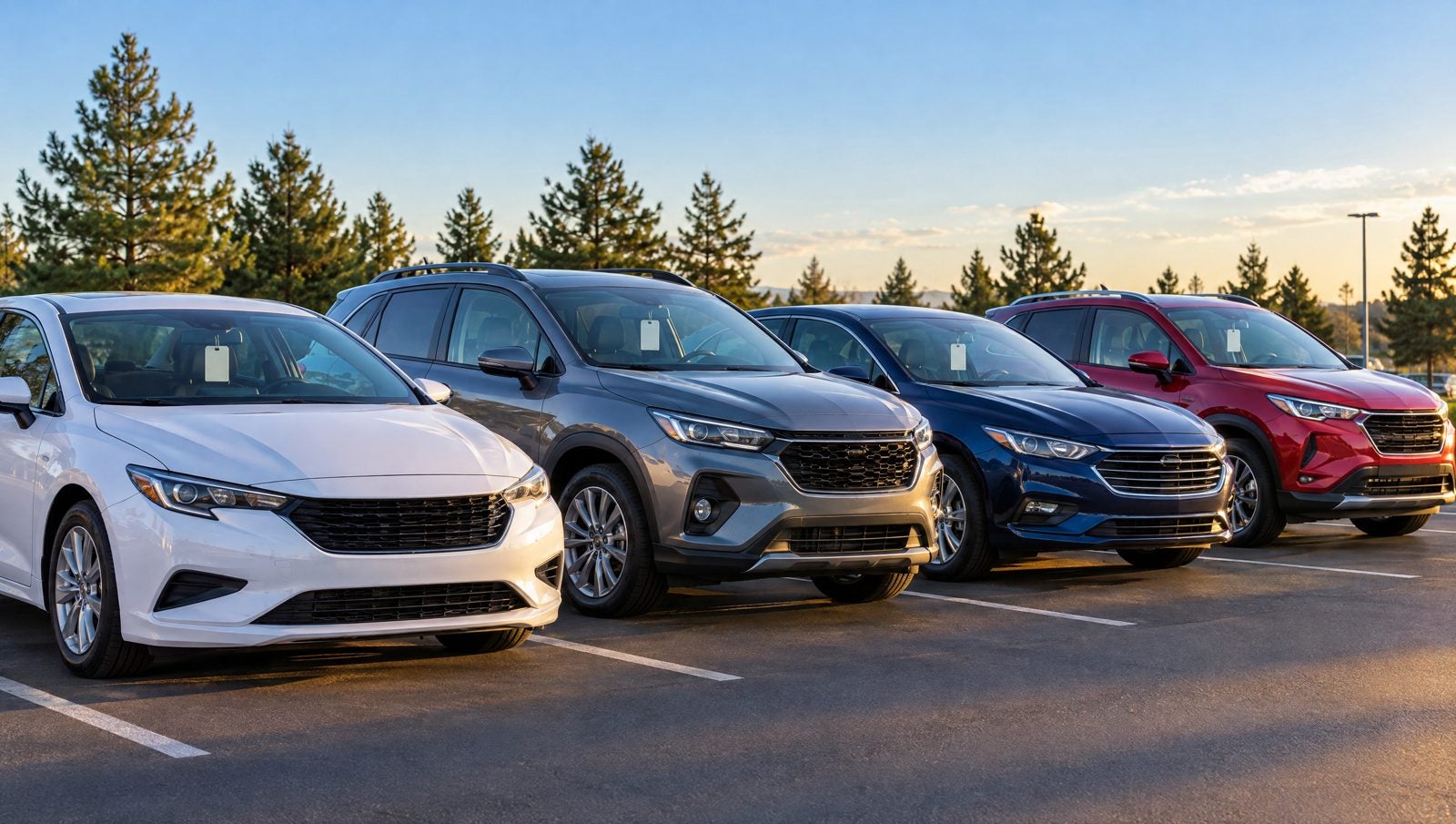
Around $20,000, you're typically looking at a compact SUV or a sedan that's a few years old with average miles. Prices move with supply, so treat that as a pattern, not a promise. Current inventory tells the real story.

Here's the trade-off that trips people up. A newer sedan with higher miles and an older midsize car with fewer miles can cost about the same. Which one wins depends on how you drive.

If you commute on I-95 or US-301 every day, the miles pile up fast, and a newer car with more life ahead of it can make sense. If the car mostly runs to town and back, an older one with low miles can be the better buy.

SUVs tend to cost more than sedans of the same age. If the budget is tight, a sedan closes the gap.

What if you only have $15,000?

You can still buy a good car. You'll look at older models or higher miles, and you'll need to do more homework. A $15,000 car with a clean history report and a clean inspection beats a $20,000 car with surprises. Our used cars under $15,000 page shows what's available today.

How do the three price bands compare?

Each band trades something. Lower prices usually cost you age or miles, and higher prices buy peace of mind. This table is general market guidance, not a list of our cars. Use it to set expectations before you look at real inventory.

Price bandWhat to expectWho it fits
Under $15,000Older models or higher miles. Fewer extras. Plan on an inspection and some maintenance soon.First-time buyers, a second car for the family, or anyone who wants a small payment
$15,000 to $20,000Compact SUVs and sedans a few years old with average miles. More recent safety and tech features.Most budget-minded shoppers, daily commuters, small families
A little over $20,000 (CPO range)Newer, lower-mileage cars, often with a certified pre-owned warranty.Buyers who want a longer warranty and fewer surprises

What will a used car really cost you in North Carolina?

The sticker price is only the start. Set an all-in budget before you shop: payment, insurance, fuel and maintenance. A car that fits your payment but drains your gas and repair money isn't a bargain.

Taxes first. North Carolina charges a 3 percent highway-use tax (NCDMV) instead of a state sales tax, each time a title transfers. NCDOT describes it as 3 percent "less net of trade," which means a trade-in lowers the amount the tax is figured on. Our finance team will show you the numbers on a specific car.

Then the running costs.

  • Insurance can run higher on newer cars, so get a quote on the exact car before you sign.
  • Fuel adds up on long drives, especially if you commute every day from Scotland Neck or Enfield.
  • Maintenance is easier to plan for than to be surprised by. Budget for oil changes, tires and brakes, especially in the lower band.

Is a certified pre-owned car worth it at this price?

Sometimes. Nissan Certified Pre-Owned cars often cost more than a non-certified used car. For the extra money you get a 167-point inspection, a 7-year/100,000-mile limited warranty (whichever comes first), 24/7 roadside assistance, a CARFAX report, and a transferable warranty with a $100 deductible. Gas-powered Nissan models also include 1 year of pre-paid maintenance.

Here's our take. If your budget tops out near $15,000, CPO is probably out of reach, and a well-inspected regular used car is the smarter play. If you can stretch a little past $20,000 and want the longer warranty, CPO earns its price. We cover this in depth in our post on the benefits of buying a Nissan certified pre-owned vehicle, and you can browse our certified pre-owned page.

How do you check a used car before you buy it?

Check the history, drive it, and have it inspected. Those steps catch most problems before you own them, and they're worth doing on any car from any lot.

  1. Get the vehicle history report and read it. Look for accidents, title problems and gaps in the record.
  2. Ask to see the multi-point inspection and reconditioning paperwork. It shows what was fixed before the car went up for sale.
  3. Test drive it on roads you actually use. Take it on the highway, down a back road, and through a parking lot.
  4. Consider an independent pre-purchase inspection. For an older, higher-mileage car, it's the best money you'll spend.

How do financing and trade-ins work on a used-car budget?

Start with pre-qualification. You can fill out our online pre-qualification form from home and get a clearer picture of your budget before you drive anywhere. Our finance team works with multiple lenders and with all kinds of credit situations. More detail is on our finance page.

If your credit is bruised, don't assume the door is closed. Our post on bad credit car loans near Roanoke Rapids explains how it works.

Your trade-in helps twice. It lowers what you need to finance, and it can lower the taxable amount. Know its value before you talk numbers, and ask about current offers.

Where do you find used cars under 20000 near me?

Start online, then call. Our used cars under $20,000 search shows what's on the lot now, and the under $15,000 search narrows it further. We carry Nissans and other brands, so the results aren't limited to one badge.

Inventory changes daily, and a car you saw this morning could sell by lunch. Rocky Mount is about 45 minutes south of us on I-95, so call 252-677-5679 and confirm the car is still here before you leave. The same goes for shoppers in Tarboro, Wilson or Nashville. Emporia, Virginia is about 25 minutes north.

Sales hours are Monday through Friday, 9:00 AM to 7:00 PM, and Saturday, 9:00 AM to 6:00 PM. We're closed Sundays. Our broader guide to used cars for sale near Roanoke Rapids and Rocky Mount covers the basics.

Frequently asked questions

What's the best used car under $20,000?

There's no single best car. For most shoppers, a compact SUV or sedan a few years old with average miles is a strong choice at that price. The best one for you has a clean history report, a clean inspection and running costs you can live with. Check current inventory to see what's available.

Is it better to buy a newer car with more miles or an older one with fewer?

It depends on how you drive. For a long daily commute on I-95, a newer car with more miles can outlast an older one. For short trips around town, an older car with fewer miles can be a fine value. Either way, the history report and an inspection matter more than the odometer alone.

Do I pay sales tax on a used car in NC?

North Carolina charges a 3 percent highway-use tax instead of a state sales tax, each time a title transfers. Your trade-in can lower the amount the tax is figured on. Our finance team will show you the numbers on the specific car you're considering.

Can I get a used car under $20,000 financed with bad credit?

Possibly, and the first step is to ask. Our finance team works with multiple lenders and with all kinds of credit situations, though we can't promise any outcome until we see your details. Start with our online pre-qualification form, and read our bad credit car loans post for how the process works.

Is a CPO Nissan worth the extra cost?

It can be, if you value a longer warranty and a thorough inspection. CPO cars often cost more than non-certified used cars. In return you get a 167-point inspection, a 7-year/100,000-mile limited warranty, roadside assistance and a CARFAX report. If your budget is tight, a well-inspected regular used car can be the better call.

Should I get a used car inspected before I buy?

Yes, especially on older or higher-mileage cars. An independent mechanic can catch problems a test drive won't. It costs a little up front and can save you much more later. Read the history report and the reconditioning paperwork too.

Stop by Nissan of Roanoke Rapids

We're at 407 Premier Blvd, Roanoke Rapids, NC 27870, right off I-95. Sales hours are Monday through Friday, 9:00 AM to 7:00 PM, and Saturday, 9:00 AM to 6:00 PM.

Pick two or three cars from the used cars under $20,000 search, then call 252-677-5679 before you drive in. Thinking about new instead? Our 2026 Nissan Kicks review covers a budget SUV.

Related articles


Posted in:

Related Posts

Nissan Military Discount: Who Qualifies for the $500

Nissan Military Program: Who Qualifies for the $500 and How to Use It

Key takeaways The Nissan Military Program gives $500 cash back toward buying or leasing a qualifying new Nissan. Four groups qualify: active and reserve personnel, veterans within 24 months of separation, retirees with 20 or more years, and surviving family members. A veteran who separated more than 24 months ago and did not retire after 20 years does not qualify under the current terms. The $500 can be combined with current national and regional incentives, but not with the College Grad Program. Bring proof of eligibility, and ask us which models are on Nissan's eligible list right now. If you're shopping for the Nissan military discount in Roanoke Rapids, Rocky Mount or anywhere in between, here's the short answer. Nissan will take $500 off a qualifying new car, truck or SUV for active duty, reserve, some recent veterans, military retirees and surviving family members. It works on a purchase or a lease. Here's the part people miss. The veteran piece has a clock on it. Plenty of folks assume they qualify forever, and under Nissan's current terms they don't. We'll explain exactly where that line sits so you don't make the drive for nothing. Veterans Day is Wednesday, November 11, 2026, so this is a good time to get your paperwork together. Everything below comes from Nissan's own program terms. Nissan can change or end the program at any time, so we'll confirm it with you when you come in. What is the Nissan Military Program? It's a manufacturer cash-back offer. Nissan calls it "You Serve, You Save," and it pays $500 toward the purchase or lease of a qualifying new Nissan from a dealer's new stock. It isn't a dealer markdown, and it isn't a percentage off. It's a flat $500, and we'd rather tell you that up front than have you expect more at the desk. Does the $500 stack with other offers? Yes. Nissan says the military cash can be combined with all current national and regional incentives. So if there's a cash-back or finance offer running on the model you want, you can often take the military $500 on top of it. Ask about current offers when you're here, because those change month to month. You can also look at our current Nissan offers before you visit. Who qualifies for the Nissan military discount? Nissan names four groups, and every one of them needs proof of eligibility. You also need to be a U.S. resident with a valid U.S. driver's license. If you fit one of the groups below, you're eligible for the Nissan Military Program in principle, and we'll confirm the details with your documents. Current U.S. active and reserve military personnel. U.S. military veterans within 24 months of separation from active or reserve duty. U.S. military retirees who completed at least 20 years of active or reserve duty. A U.S. military surviving spouse, child or parent who gives the dealer a photocopy of a DD-214, a Summary of Benefits letter or a death certificate. The 24-month catch for veterans This is the one that surprises people. A veteran qualifies only if they separated within the last 24 months, or if they retired after at least 20 years. If you served six years, got out in 2019 and never retired from the military, the program as written doesn't cover you now. Better to hear that now than at the desk. If that's you, skip ahead to the section on what to do when you don't qualify. You have real options there. What about the National Guard? Nissan's terms say "active and reserve" personnel. They don't spell out the National Guard, and we're not going to promise something Nissan hasn't written down. If you're in the Guard, bring your paperwork and we'll check it against Nissan's current rules, so you leave with a straight answer. Do you qualify, and what should you bring? Who you are Do you qualify? What to bring Active duty or reserve Yes, with proof Military ID or current orders (we'll confirm what Nissan accepts), valid U.S. driver's license Veteran, separated within 24 months Yes, with proof DD-214 (we'll confirm what Nissan accepts), valid U.S. driver's license Veteran, separated more than 24 months ago, under 20 years of service No, under the current terms Nothing to bring. See the options below Military retiree with 20 or more years Yes, with proof Military ID and retirement paperwork (we'll confirm what Nissan accepts), valid U.S. driver's license Surviving spouse, child or parent Yes, with documents Photocopy of a DD-214, Summary of Benefits letter or death certificate National Guard Ask us. Nissan's terms say "active and reserve" Your paperwork, and we'll check it against current rules Nissan's terms only name the DD-214, the Summary of Benefits letter and a death certificate (the last two for surviving family). For everyone else, bring your military ID, current orders or discharge paperwork, and we'll confirm what Nissan accepts. We don't want to guess at paperwork rules and have you make a second trip. Which Nissan vehicles are eligible? Not every model is on the list. Nissan publishes a set of current eligible vehicles under "Military Cash Program Offers" on nissanusa.com, and that list changes. The offer applies to new vehicles from dealer stock only, so it won't work on a used car or a Certified Pre-Owned one. The simplest move is to ask us which models qualify right now. You can browse our new inventory first and tell us what you like. If you're leaning toward a truck, our Frontier buying guide is a good place to start. What doesn't the Nissan Military Program combine with? There are four limits, and they're all in Nissan's fine print. Knowing them ahead of time keeps the paperwork smooth. College Grad Program. The military offer can't be combined with the Nissan College Grad Program or other VPP offers. If you qualify for both, you pick one. Both are $500, so the choice rarely changes the math much. Two per year. You can use it on up to 2 vehicle purchases or leases per calendar year, per qualified participant. Personal use only. It isn't valid for fleet or business use. Residency rules. It's subject to residency restrictions, which is why Nissan asks for a valid U.S. driver's license. Nissan also says other restrictions may apply and that the offer can change or end without notice. That's standard for manufacturer programs, but it's a good reason to ask before you assume. How do you get the most out of the military discount? The $500 is the floor, not the whole deal. A few habits make a bigger difference than the cash back itself, and none of them cost you anything. First, ask about every other incentive running on the model you want. Because the military cash stacks with national and regional offers, those can add up. Second, know what your trade is worth before you walk in. In North Carolina, your trade-in can lower the amount the 3 percent highway-use tax is figured on, and our finance team will show you the numbers. Third, check new inventory early. If you're coming from Enfield, Weldon or Scotland Neck, a quick look online saves you a trip. If you want to line up financing ahead of time, our online pre-qualification form is there for that. What if you don't qualify? You still have options, and some of them are good ones. Start with the national offers. Check our current Nissan offers page, since many apply no matter who you are. If you want a lower price of entry, look at used. Our lot carries Nissans and other brands, and you can search it any time. If you want more peace of mind than a regular used car gives, Nissan Certified Pre-Owned comes with a 167-point inspection and a 7-year/100,000-mile limited warranty, whichever comes first. CPO cars often cost more than a non-certified used car, and that's a fair trade-off to weigh. Our post on the benefits of buying a Nissan Certified Pre-Owned vehicle walks through it. Stationed overseas? Nissan runs a separate program called Military AutoSource for service members abroad. You can find it at militaryautosource.com. A note for Veterans Day Veterans Day is about more than a car deal. What we can do is make sure that anyone who served, and the families who carry that service with them, leaves knowing exactly what they qualify for. To everyone in Halifax County and the towns around it, from Weldon to Littleton and on up toward Emporia, who has served or lost someone who did: thank you. If you're stopping in this month, we'd be glad to help you sort out the paperwork and the numbers. Frequently asked questions Do all veterans qualify for the Nissan military discount? No. Under Nissan's current terms, a veteran qualifies only if they separated from active or reserve duty within the last 24 months. Veterans who separated earlier qualify only if they retired after completing at least 20 years of service. Everyone needs proof of eligibility. If you're unsure, bring your DD-214 and we'll check it. Does the National Guard qualify? We can't promise it. Nissan's terms say "active and reserve" personnel and don't spell out the Guard. If you're in the National Guard, bring your paperwork to the dealership and we'll check it against Nissan's current rules. You'll get a clear answer before you decide anything. Can a spouse use the Nissan Military Program? It depends on the situation. Nissan names a surviving spouse, child or parent, who must provide a photocopy of a DD-214, a Summary of Benefits letter or a death certificate. A spouse of someone who is living and still serving isn't listed in the terms. Call us at 252-677-5679 and we'll check how Nissan handles your case. Can I use it on a lease? Yes. The $500 applies toward the purchase or the lease of a qualifying new Nissan from dealer stock. The same limits apply either way: up to 2 purchases or leases per calendar year, personal use only, and not for fleet or business use. Ask us which models qualify for a lease right now. Does it work on used or CPO cars? No. The Nissan Military Program applies only to new vehicles from new dealer stock. It doesn't apply to used cars or Certified Pre-Owned cars. If you want a pre-owned vehicle, ask us about current offers and pricing, or see our used cars near Roanoke Rapids and Rocky Mount. Can I combine it with the College Grad Program? No. Nissan says the military offer can't be combined with the Nissan College Grad Program or other VPP offers. You'd choose the one that fits you better. The military offer can still be combined with current national and regional incentives, which is a different thing. Stop by Nissan of Roanoke Rapids We're at 407 Premier Blvd, Roanoke Rapids, NC 27870, right off I-95. Rocky Mount is about 45 minutes south on I-95, and Emporia, VA is about 25 minutes north. Sales hours are Monday through Friday, 9:00 AM to 7:00 PM, and Saturday, 9:00 AM to 6:00 PM. We're closed Sunday. Bring your proof of eligibility and call 252-677-5679 if you have a question first. You can also read about the program on our military program page. We'll tell you straight whether you qualify and which models it applies to today. Related articles Nissan dealer near me: a local buyer's guide 2026 Nissan Rogue: what buyers need to know 2026 Nissan Frontier: everything you need to know before buying Benefits of buying a Nissan Certified Pre-Owned vehicle

Gas, hybrid, plug-in hybrid, or EV: what actually fits eastern NC driving

Gas, hybrid, plug-in hybrid, or EV: what actually fits eastern NC driving

There's no single right answer here, and we'd rather tell you that up front. What fits you depends on how many miles you rack up on I-95, whether you have a place to plug in overnight, and how much you want to think about charging at all. We get this question a lot at the dealership, usually from someone who read something online about gas prices or tax credits and isn't sure what still applies. A lot has changed this year. So let's walk through it the way we'd talk it through on the lot, trim by trim, fee by fee. Key takeaways Your commute matters more than any badge: highway miles favor gas or hybrid, short local trips are where an EV works best. The federal EV tax credit is gone for anything bought after September 30, 2025, so don't plan around that $7,500. North Carolina charges EVs $214.50 a year and plug-in hybrids $107.25 a year in extra registration fees, but a regular hybrid like the upcoming Rogue Hybrid pays neither because it never plugs in. Public fast charging along I-95 is expanding under a state program, but it isn't finished, so a home charger still matters if you're leaning toward an EV. Nissan covers all four options right now: gas trucks and SUVs, the incoming Rogue Hybrid, the Rogue Plug-in Hybrid, and the all-electric LEAF. Gas, hybrid, plug-in hybrid, EV: what's actually different A gas vehicle is what most of Halifax County still drives, and for a lot of people it's still the right call. Nothing to plug in, familiar fuel stops, no learning curve. A regular hybrid, like the Rogue Hybrid coming later this year, still runs on gasoline only. It never plugs in. It just uses a battery and electric motors to help the engine do less work, which is where the fuel economy gain comes from. A plug-in hybrid, like the Rogue Plug-in Hybrid, has a bigger battery you can charge at home, plus a gas engine as backup. You get some electric driving and a gas tank for everything else. A full EV, like the LEAF, runs on battery power only. No gas engine at all. You charge it at home, at a public charger, or both. How you actually drive should decide this If most of your week is Roanoke Rapids to Weldon, Halifax, or Gaston, with the occasional run down to Rocky Mount, about 45 minutes south on I-95, or up to Emporia, roughly 25 minutes north, you're not putting on the kind of highway miles that punish a hybrid or a gas engine. A hybrid or even a well-suited EV can handle that pattern fine. If your day looks more like a long I-95 commute, or you're out on rural Halifax County roads that don't exactly have a charger on every corner, gas or a regular hybrid makes more sense. Highway speed is where an EV's range takes the biggest hit, and it's also where public charging is still catching up in this part of the state. Charging at home vs. charging on the road Home charging is the easy part. Plug in overnight and you wake up to a full battery, no different from charging your phone. For local driving, that covers almost everything. Public fast charging along I-95 is a different story, and it's still a work in progress. North Carolina's Department of Transportation runs a federally funded program building DC fast chargers along the state's major highway corridors, I-95 included, and a second round of funding opened for new stations in early 2026. The state has also been shifting some of that focus toward rural coverage rather than just the busiest interstate stretches. That's good news longer term, but it means the network through Halifax County is still growing, not finished. If a road trip is part of your plan, check a live locator like PlugShare before you go rather than assuming a station will be there. What happened to the federal EV tax credit If you've been holding off on an EV waiting for the $7,500 federal credit, here's the update: it's gone. The credit ended for any vehicle acquired after September 30, 2025, along with the smaller used clean vehicle credit. That change came out of the One Big Beautiful Bill Act, signed in July 2025, which repealed both credits ahead of schedule. There was a narrow window for buyers who signed a binding purchase contract before that September 30 deadline, but that's closed now. Anyone shopping today should plan on the sticker price, not a credit that isn't coming. North Carolina's extra fees for EVs and plug-in hybrids This one trips people up, so here's the plain version. Vehicle type Extra annual NC fee Battery-electric (like the LEAF) $214.50/year Plug-in hybrid (like the Rogue Plug-in Hybrid) $107.25/year Regular hybrid (like the 2027 Rogue Hybrid) $0, standard registration only The state's fee applies to vehicles that plug in, full stop. A regular hybrid, including the Rogue Hybrid arriving late this fall, never plugs into anything. It fills up at a regular gas station and registers just like any other gasoline vehicle, so it skips this fee entirely. That surprises a lot of shoppers who assume "hybrid" automatically means extra fees. It doesn't, unless there's a plug involved. Gas prices vs. electricity costs, in plain terms Gas prices in North Carolina have swung quite a bit this fall, bouncing from the high $3s a gallon in late summer up into the $4 range more recently, according to AAA. That kind of volatility makes it hard to plan around a fixed number, so we'd rather point you to a live price tracker than quote you something that'll be wrong by the time you read this. Electricity is steadier. North Carolina's average residential rate is about 14.74 cents per kilowatt-hour, per the U.S. Energy Information Administration, and it doesn't swing week to week the way gas does. Here's an example only, using made-up but reasonable assumptions, not a promise of your actual savings: say you drive 12,000 miles a year. A gas vehicle averaging 25 mpg at $4 a gallon would burn through roughly $1,920 in fuel. An EV averaging 3.5 miles per kilowatt-hour at North Carolina's 14.74 cent rate would use about $505 in electricity to cover the same distance. Your real numbers will depend on your specific vehicle, how you drive, and where you charge, so treat this as a rough shape of the comparison, not a quote. Which Nissan fits how you actually drive If you... Look at Mostly run local errands and can charge at home 2026 LEAF (EV), $29,990 to $38,990 MSRP, 259 to 303 miles EPA-estimated range Split time between town and an I-95 commute, want better mpg without plugging in 2027 Rogue Hybrid, arriving late fall 2026, SR estimated at 38 mpg combined Like the idea of running on electricity most days but want a gas backup for longer trips Rogue Plug-in Hybrid, $45,990 MSRP Drive long highway miles to Rocky Mount, Emporia, or beyond on a regular basis Rogue, Sentra, or Pathfinder (gas) Need to tow or haul for work, hunting, or fishing trips Frontier (gas) Want the lowest price of entry, plain and simple Kicks or Sentra (gas) Frequently asked questions Is an EV realistic if I live out in rural Halifax County? It depends mostly on whether you can charge at home and how far your daily driving actually stretches. If your trips are mostly local with occasional highway runs, a LEAF can work well with home charging covering most nights. If you're regularly driving long distances on rural roads without a charger nearby, a gas vehicle or the Rogue Hybrid will fit better. Do hybrids cost more to register in North Carolina than gas vehicles? A regular hybrid like the Rogue Hybrid doesn't, because it never plugs in and registers like any other gas vehicle. Plug-in hybrids pay an extra $107.25 a year, and battery-electric vehicles pay an extra $214.50 a year, on top of standard registration. Will buying a Rogue Hybrid qualify me for a tax credit? No. The federal EV tax credit ended for vehicles acquired after September 30, 2025, and that applies to plug-in and electric vehicles anyway, not to a regular hybrid. Don't plan your budget around a credit that no longer exists. How much does it cost to charge an EV at home? It depends on your electricity rate and how much charging you need, but North Carolina's average residential rate is about 14.74 cents per kilowatt-hour per the EIA. Ask us about home charging setup when you're shopping the LEAF. Is the Rogue Plug-in Hybrid the same as the Rogue Hybrid? No, they're two different vehicles. The Rogue Plug-in Hybrid has a larger battery you charge at home with a gas engine as backup, starting at $45,990 MSRP. The Rogue Hybrid, arriving late this fall, never plugs in at all and runs purely on gasoline with hybrid assistance. Should I wait for more charging stations before buying an EV? That's a fair question, and it depends on your driving pattern. North Carolina's fast-charging network along I-95 is actively expanding under a state and federal program, but it's not complete yet. If your driving is mostly local and you can charge at home, you don't need to wait. If you rely heavily on long highway trips, it's worth a real conversation with us about whether an EV fits your routine today. Come see it at Nissan of Roanoke Rapids The honest answer is usually clearer in person than on paper. Bring us your typical week, your commute, your I-95 stretch, and we'll walk you through the Kicks, Sentra, Rogue, Frontier, Pathfinder, the incoming Rogue Hybrid, the Rogue Plug-in Hybrid, and the LEAF so you can compare them side by side. Nissan of Roanoke Rapids, 407 Premier Blvd, Roanoke Rapids, NC 27870, right off I-95. Call us at 252-677-5679. We're open Monday through Friday 9 AM to 7 PM, Saturday 9 AM to 6 PM, closed Sunday. Ask about current inventory and offers when you call.

2027 Rogue Hybrid vs. RAV4 Hybrid: an honest comparison

2027 Rogue Hybrid vs. RAV4 Hybrid: an honest comparison

Key takeaways The RAV4 Hybrid starts lower at $31,900 MSRP, but that price is front-wheel drive. Every Rogue Hybrid ($35,490 MSRP to start) comes with AWD. The RAV4 wins on gas mileage: up to 43 mpg combined (Toyota estimate) vs. 38 combined for the Rogue Hybrid SR (Nissan estimate). The two work differently. In the Rogue, the gas engine only makes electricity and electric motors always drive the wheels, so it feels like an EV. The RAV4 is on sale now. The Rogue Hybrid arrives late fall 2026 as one launch trim, with the full lineup in early 2027. Nissan built the Rogue Hybrid to go straight after the RAV4, and we're not going to pretend otherwise. So let's put them side by side and tell you where each one actually wins, because they don't win the same categories. Short version: the RAV4 gets better gas mileage and starts cheaper. The Rogue Hybrid gives you standard all-wheel drive on every trim and a driving feel closer to an electric car, without ever needing a plug. Which one fits you depends on what you're optimizing for. This is a hybrid-to-hybrid comparison. If you want the gas-only version of this matchup, we've already covered that one separately, linked below. Price: RAV4 starts lower, but read the fine print Toyota's RAV4 Hybrid starts at $31,900 MSRP, and that's the FWD model, before Toyota's dealer processing and handling fee. That's a real gap under the Rogue Hybrid's $35,490 SV starting price. Here's the catch, and it's an important one. Every Rogue Hybrid comes with AWD standard, so that $35,490 already includes it. Toyota's $31,900 figure is for front-wheel drive, and AWD costs extra on most RAV4 Hybrid grades. So the RAV4 is cheaper to get into, full stop, but part of that gap closes once you price an AWD RAV4 against a Rogue Hybrid that has AWD built in. 2027 Rogue Hybrid 2026 RAV4 Hybrid Starting MSRP $35,490 (SV AWD) $31,900 (FWD) AWD Standard, every grade Optional on most grades, standard on Woodland Horsepower 225 (all grades) 226 (FWD), 236 (AWD) Combined mpg (Nissan/Toyota estimate) 38 (SR grade only) Up to 43 (FWD, best case) Hybrid system e-POWER (gas engine generates electricity only) 5th-gen Toyota hybrid, planetary CVT On sale Late fall 2026 (SR AWD only), full lineup early 2027 On sale now Horsepower and torque The Rogue Hybrid makes 225 horsepower across every grade, SV through Platinum. The RAV4 Hybrid is trim-dependent: 226 net combined horsepower on FWD models, 236 on AWD models, which is actually a touch higher than the Rogue in its all-wheel-drive form. Torque numbers are where things get murkier on the Rogue side. Nissan hasn't published one combined torque figure the way it has for horsepower. The front motor alone is rated at 243 lb-ft, with a separate rear motor doing its own work. We're not going to hand you a "225 hp / 243 lb-ft" line like it's one clean combined number, because Nissan itself hasn't confirmed it that way. Fuel economy: RAV4 wins this one We'll say it plainly. The RAV4 Hybrid gets better gas mileage. Toyota's FWD models are estimated at 47 city, 40 highway, 43 combined mpg, the best numbers in this matchup. AWD RAV4 trims land anywhere from 38 to 42 combined, depending on grade, still ahead of what Nissan has published for the Rogue Hybrid so far. Nissan's own estimate for the Rogue Hybrid SR is 40 city, 36 highway, 38 combined. That's a Nissan internal testing figure, not yet finalized by the EPA, and it's specific to the SR grade. SV and Platinum numbers hadn't been published as of this writing, so we can't tell you if they'll be higher or lower. If mpg is the deciding factor for your budget, especially if you're commuting down to Rocky Mount or up toward Emporia every day, the RAV4 has the edge here. We'd rather tell you that than dance around it. How each hybrid actually works, and how it drives This is where the two are really different machines under the skin. The Rogue Hybrid uses Nissan's e-POWER system. The gas engine's only job is to spin a generator and make electricity. It's never physically connected to the wheels. Electric motors handle all the actual driving, all the time, which means there's no traditional transmission shifting gears underneath you. It drives like an EV: instant response, smooth power delivery, no plug required. Nissan also builds in e-Pedal, a one-pedal mode that lets you slow to a full stop just by lifting off the accelerator. The RAV4 uses Toyota's fifth-generation hybrid system, a 2.5-liter engine paired with two motor-generators through what Toyota calls a planetary-type continuously variable transmission. People in the industry often describe this layout as series-parallel, meaning the gas engine can help drive the wheels directly in some situations, not just generate electricity. AWD RAV4 models add a separate rear motor for power on demand. Toyota has been refining this basic setup for years across the Prius, Camry, and RAV4, so if you've driven a Toyota hybrid before, it'll feel familiar. Neither approach is wrong. The Rogue feels more like driving an electric car that happens to run on gas. The RAV4 feels more like a conventional car that happens to sip less fuel, with Toyota's long track record behind it. Tech and safety features Toyota Safety Sense 4.0 comes standard on every RAV4 grade, no matter what you spend. It includes updated pre-collision detection and lane tracing assist. Toyota also just introduced a new Audio Multimedia system on the RAV4, with a faster voice assistant and built-in 5G connectivity. Nissan's tech is more trim-dependent. Base SV and SR Rogue Hybrids get a 12.3-inch touchscreen and matching digital cluster. Step up to the SR Technology Package or Platinum trim and you get dual 14.3-inch displays with Google built in, plus the bigger driver-assist features: Auto Lane Change and Hands-off Traffic Jam Support. Those aren't available on a base SV or SR without the tech package. One thing we like on the Nissan side that's worth mentioning here: the Rogue Hybrid keeps physical buttons for climate control. You're not digging through a touchscreen to adjust the heat while you're driving. Warranty: ask before you sign Toyota publishes hybrid-specific coverage for the RAV4: 8 years or 100,000 miles on hybrid components and 10 years or 150,000 miles on the hybrid battery. Every Rogue Hybrid carries Nissan's 3-year/36,000-mile basic and 5-year/60,000-mile powertrain coverage. Nissan hasn't released the Rogue Hybrid's hybrid-component terms in its launch materials yet, so if that coverage matters to you (and on any hybrid, it should), ask us and we'll show you the exact terms in writing before you buy. So which one is right for you? If you want AWD included at the starting price without upgrading, want a driving feel closer to an electric car, and like the idea of a tech-forward cabin that still has real climate buttons, the Rogue Hybrid is built for you. It's also the newer platform, so you're getting Nissan's latest thinking on this segment. If maximum fuel economy is your top priority and you're fine with AWD being an add-on rather than standard, the RAV4 Hybrid is a strong pick, and it's already on dealer lots while the Rogue Hybrid is still rolling out. Come drive both if you can. Specs on a page only tell you so much, and the difference between e-POWER and Toyota's hybrid system is something you feel within the first mile. Frequently asked questions Which gets better gas mileage, the Rogue Hybrid or RAV4 Hybrid? The RAV4 Hybrid, based on Toyota's own estimates. FWD RAV4 models are rated up to 43 mpg combined. The Rogue Hybrid SR is estimated at 38 mpg combined by Nissan, and that's the only grade with a published number so far. Is AWD standard on both? No. AWD is standard on every Rogue Hybrid grade. On the RAV4 Hybrid, AWD is optional on most grades and only comes standard on the Woodland off-road trim and the plug-in hybrid models. Which one has more horsepower? It depends on the trim. The Rogue Hybrid makes 225 horsepower across the board. The RAV4 Hybrid makes 226 horsepower in FWD form and 236 in AWD form, which edges out the Rogue. Does the Rogue Hybrid drive like a regular car? Not quite. Because Nissan's e-POWER system uses electric motors to drive the wheels at all times, it feels closer to an electric vehicle than a traditional gas car, including the one-pedal driving mode. You never plug it in, though. It runs entirely on gasoline. What's the warranty difference? Toyota publishes specific hybrid coverage: 8 years/100,000 miles on hybrid components, 10 years/150,000 miles on the battery. The Rogue Hybrid carries Nissan's 3-year/36,000-mile basic and 5-year/60,000-mile powertrain warranty, and Nissan hasn't published its hybrid-component terms yet. Ask us and we'll confirm exact coverage in writing before you buy. Can I get a Rogue Hybrid right now? Only in limited numbers this fall, and only as the SR AWD with the SR Technology Package. The rest of the lineup arrives early 2027. The RAV4 Hybrid is already available. Come see it at Nissan of Roanoke Rapids Want to see the Rogue Hybrid in person and compare it against whatever else is on your list? Come take a look, ask us the hard questions, and we'll give you straight answers, including where the competition actually wins. Nissan of Roanoke Rapids, 407 Premier Blvd, Roanoke Rapids, NC 27870, right off I-95. Call 252-677-5679. Open Monday through Friday 9 AM to 7 PM, Saturday 9 AM to 6 PM, closed Sunday.