
Key takeaways
- The RAV4 Hybrid starts lower at $31,900 MSRP, but that price is front-wheel drive. Every Rogue Hybrid ($35,490 MSRP to start) comes with AWD.
- The RAV4 wins on gas mileage: up to 43 mpg combined (Toyota estimate) vs. 38 combined for the Rogue Hybrid SR (Nissan estimate).
- The two work differently. In the Rogue, the gas engine only makes electricity and electric motors always drive the wheels, so it feels like an EV.
- The RAV4 is on sale now. The Rogue Hybrid arrives late fall 2026 as one launch trim, with the full lineup in early 2027.
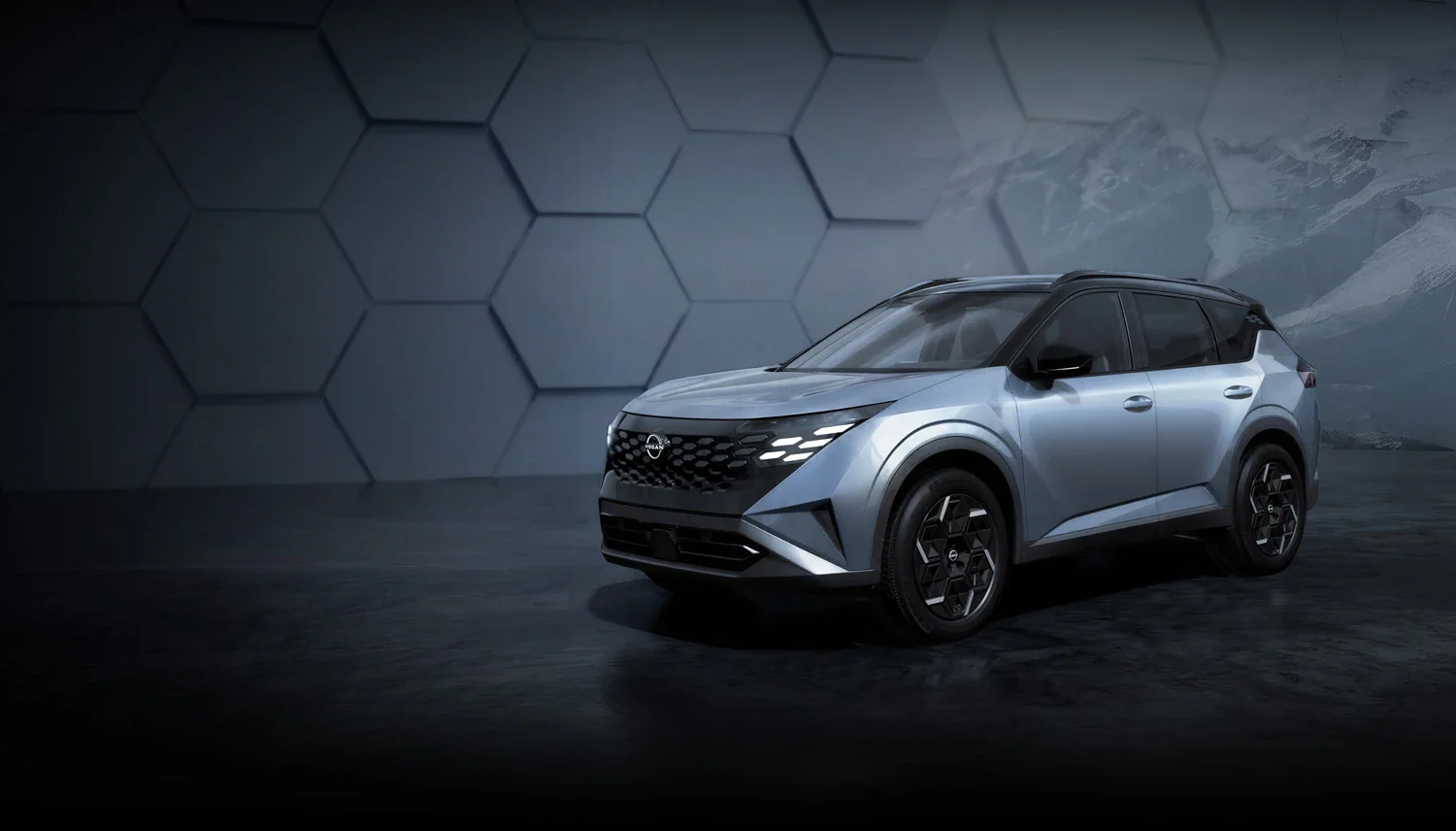
Nissan built the Rogue Hybrid to go straight after the RAV4, and we're not going to pretend otherwise. So let's put them side by side and tell you where each one actually wins, because they don't win the same categories.
Short version: the RAV4 gets better gas mileage and starts cheaper. The Rogue Hybrid gives you standard all-wheel drive on every trim and a driving feel closer to an electric car, without ever needing a plug. Which one fits you depends on what you're optimizing for.
This is a hybrid-to-hybrid comparison. If you want the gas-only version of this matchup, we've already covered that one separately, linked below.
Price: RAV4 starts lower, but read the fine print
Toyota's RAV4 Hybrid starts at $31,900 MSRP, and that's the FWD model, before Toyota's dealer processing and handling fee. That's a real gap under the Rogue Hybrid's $35,490 SV starting price.
Here's the catch, and it's an important one. Every Rogue Hybrid comes with AWD standard, so that $35,490 already includes it. Toyota's $31,900 figure is for front-wheel drive, and AWD costs extra on most RAV4 Hybrid grades. So the RAV4 is cheaper to get into, full stop, but part of that gap closes once you price an AWD RAV4 against a Rogue Hybrid that has AWD built in.
| 2027 Rogue Hybrid | 2026 RAV4 Hybrid | |
|---|---|---|
| Starting MSRP | $35,490 (SV AWD) | $31,900 (FWD) |
| AWD | Standard, every grade | Optional on most grades, standard on Woodland |
| Horsepower | 225 (all grades) | 226 (FWD), 236 (AWD) |
| Combined mpg (Nissan/Toyota estimate) | 38 (SR grade only) | Up to 43 (FWD, best case) |
| Hybrid system | e-POWER (gas engine generates electricity only) | 5th-gen Toyota hybrid, planetary CVT |
| On sale | Late fall 2026 (SR AWD only), full lineup early 2027 | On sale now |
Horsepower and torque
The Rogue Hybrid makes 225 horsepower across every grade, SV through Platinum. The RAV4 Hybrid is trim-dependent: 226 net combined horsepower on FWD models, 236 on AWD models, which is actually a touch higher than the Rogue in its all-wheel-drive form.
Torque numbers are where things get murkier on the Rogue side. Nissan hasn't published one combined torque figure the way it has for horsepower. The front motor alone is rated at 243 lb-ft, with a separate rear motor doing its own work. We're not going to hand you a "225 hp / 243 lb-ft" line like it's one clean combined number, because Nissan itself hasn't confirmed it that way.
Fuel economy: RAV4 wins this one
We'll say it plainly. The RAV4 Hybrid gets better gas mileage. Toyota's FWD models are estimated at 47 city, 40 highway, 43 combined mpg, the best numbers in this matchup. AWD RAV4 trims land anywhere from 38 to 42 combined, depending on grade, still ahead of what Nissan has published for the Rogue Hybrid so far.
Nissan's own estimate for the Rogue Hybrid SR is 40 city, 36 highway, 38 combined. That's a Nissan internal testing figure, not yet finalized by the EPA, and it's specific to the SR grade. SV and Platinum numbers hadn't been published as of this writing, so we can't tell you if they'll be higher or lower.
If mpg is the deciding factor for your budget, especially if you're commuting down to Rocky Mount or up toward Emporia every day, the RAV4 has the edge here. We'd rather tell you that than dance around it.
How each hybrid actually works, and how it drives
This is where the two are really different machines under the skin.
The Rogue Hybrid uses Nissan's e-POWER system. The gas engine's only job is to spin a generator and make electricity. It's never physically connected to the wheels. Electric motors handle all the actual driving, all the time, which means there's no traditional transmission shifting gears underneath you. It drives like an EV: instant response, smooth power delivery, no plug required. Nissan also builds in e-Pedal, a one-pedal mode that lets you slow to a full stop just by lifting off the accelerator.
The RAV4 uses Toyota's fifth-generation hybrid system, a 2.5-liter engine paired with two motor-generators through what Toyota calls a planetary-type continuously variable transmission. People in the industry often describe this layout as series-parallel, meaning the gas engine can help drive the wheels directly in some situations, not just generate electricity. AWD RAV4 models add a separate rear motor for power on demand. Toyota has been refining this basic setup for years across the Prius, Camry, and RAV4, so if you've driven a Toyota hybrid before, it'll feel familiar.
Neither approach is wrong. The Rogue feels more like driving an electric car that happens to run on gas. The RAV4 feels more like a conventional car that happens to sip less fuel, with Toyota's long track record behind it.
Tech and safety features
Toyota Safety Sense 4.0 comes standard on every RAV4 grade, no matter what you spend. It includes updated pre-collision detection and lane tracing assist. Toyota also just introduced a new Audio Multimedia system on the RAV4, with a faster voice assistant and built-in 5G connectivity.
Nissan's tech is more trim-dependent. Base SV and SR Rogue Hybrids get a 12.3-inch touchscreen and matching digital cluster. Step up to the SR Technology Package or Platinum trim and you get dual 14.3-inch displays with Google built in, plus the bigger driver-assist features: Auto Lane Change and Hands-off Traffic Jam Support. Those aren't available on a base SV or SR without the tech package.
One thing we like on the Nissan side that's worth mentioning here: the Rogue Hybrid keeps physical buttons for climate control. You're not digging through a touchscreen to adjust the heat while you're driving.
Warranty: ask before you sign
Toyota publishes hybrid-specific coverage for the RAV4: 8 years or 100,000 miles on hybrid components and 10 years or 150,000 miles on the hybrid battery.
Every Rogue Hybrid carries Nissan's 3-year/36,000-mile basic and 5-year/60,000-mile powertrain coverage. Nissan hasn't released the Rogue Hybrid's hybrid-component terms in its launch materials yet, so if that coverage matters to you (and on any hybrid, it should), ask us and we'll show you the exact terms in writing before you buy.
So which one is right for you?
If you want AWD included at the starting price without upgrading, want a driving feel closer to an electric car, and like the idea of a tech-forward cabin that still has real climate buttons, the Rogue Hybrid is built for you. It's also the newer platform, so you're getting Nissan's latest thinking on this segment.
If maximum fuel economy is your top priority and you're fine with AWD being an add-on rather than standard, the RAV4 Hybrid is a strong pick, and it's already on dealer lots while the Rogue Hybrid is still rolling out.
Come drive both if you can. Specs on a page only tell you so much, and the difference between e-POWER and Toyota's hybrid system is something you feel within the first mile.
Frequently asked questions
Which gets better gas mileage, the Rogue Hybrid or RAV4 Hybrid?
The RAV4 Hybrid, based on Toyota's own estimates. FWD RAV4 models are rated up to 43 mpg combined. The Rogue Hybrid SR is estimated at 38 mpg combined by Nissan, and that's the only grade with a published number so far.
Is AWD standard on both?
No. AWD is standard on every Rogue Hybrid grade. On the RAV4 Hybrid, AWD is optional on most grades and only comes standard on the Woodland off-road trim and the plug-in hybrid models.
Which one has more horsepower?
It depends on the trim. The Rogue Hybrid makes 225 horsepower across the board. The RAV4 Hybrid makes 226 horsepower in FWD form and 236 in AWD form, which edges out the Rogue.
Does the Rogue Hybrid drive like a regular car?
Not quite. Because Nissan's e-POWER system uses electric motors to drive the wheels at all times, it feels closer to an electric vehicle than a traditional gas car, including the one-pedal driving mode. You never plug it in, though. It runs entirely on gasoline.
What's the warranty difference?
Toyota publishes specific hybrid coverage: 8 years/100,000 miles on hybrid components, 10 years/150,000 miles on the battery. The Rogue Hybrid carries Nissan's 3-year/36,000-mile basic and 5-year/60,000-mile powertrain warranty, and Nissan hasn't published its hybrid-component terms yet. Ask us and we'll confirm exact coverage in writing before you buy.
Can I get a Rogue Hybrid right now?
Only in limited numbers this fall, and only as the SR AWD with the SR Technology Package. The rest of the lineup arrives early 2027. The RAV4 Hybrid is already available.
Come see it at Nissan of Roanoke Rapids
Want to see the Rogue Hybrid in person and compare it against whatever else is on your list? Come take a look, ask us the hard questions, and we'll give you straight answers, including where the competition actually wins.
Nissan of Roanoke Rapids, 407 Premier Blvd, Roanoke Rapids, NC 27870, right off I-95. Call 252-677-5679. Open Monday through Friday 9 AM to 7 PM, Saturday 9 AM to 6 PM, closed Sunday.